
Bamboo vs Maple Cutting Boards: Best Choice for Modern Kitchens
In 2026, more home cooks are choosing cutting boards based on sustainability, hygiene, and knife safety—not just looks. Bamboo and maple are two of the most popular options, but they perform very differently in real kitchens. This quick comparison shows which cutting board material offers better durability, easier care, and long-term value for modern cooking.
CUTTING BOARD
Naimul
1/13/20262 min read
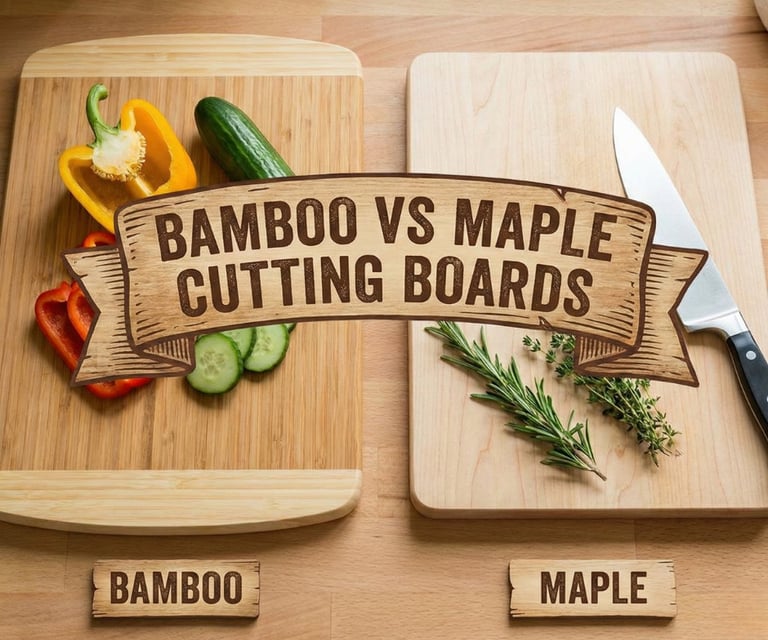
Bamboo vs. Maple Cutting Boards: Which One Should You Choose in 2026?
Choosing the right cutting board is more important than most people realize. In 2025 and 2026, home cooks and professional chefs are searching for eco-friendly cutting boards, knife-safe boards, and long-lasting kitchen tools more than ever. Two of the most popular options dominate the market: bamboo cutting boards and maple cutting boards.
Both are wooden, beautiful, and functional—but they are not the same.
This guide compares bamboo vs. maple cutting boards in a simple, practical way so you can choose the best one for your kitchen, cooking style, and long-term use.
👉 Explore premium bamboo option here: Mosomboo Bamboo Cutting Board
Overview of Bamboo Cutting Boards
Bamboo cutting boards are made from compressed bamboo grass fibers. Bamboo grows extremely fast, making it one of the most sustainable kitchen materials in 2026.
Why bamboo boards are popular:
Eco-friendly and renewable
Naturally water-resistant
Lightweight and easy to handle
Modern, clean appearance
Budget-friendly
Bamboo boards are especially popular for everyday home kitchens, apartments, and minimalist setups.
Overview of Maple Cutting Boards
Maple cutting boards are made from hardwood maple, often used in professional butcher blocks.
Why maple boards are valued:
Traditional hardwood durability
Beautiful natural grain
Softer feel under knives
Long history in professional kitchens
Maple boards are often heavier and considered more premium in traditional culinary environments.
Durability and Longevity
Bamboo boards are very strong because bamboo fibers are dense and tightly bonded. They resist cracking and warping when properly cared for.
Maple boards are also durable but may show wear faster because maple is softer than bamboo.
Winner for long-term durability: Bamboo
Knife Friendliness
Maple is naturally softer, which makes it slightly gentler on knives.
Bamboo is harder, which means it may dull knives slightly faster—but modern bamboo boards are engineered to reduce this issue.
Winner for knife softness: Maple
Winner for balanced durability: Bamboo
Maintenance and Care
Bamboo boards:
Require less oiling
Absorb less moisture
Are easier to clean
Maple boards:
Need regular oiling
Absorb more water
Require more maintenance
Winner for easy care: Bamboo
Hygiene and Bacterial Resistance
Bamboo has natural antimicrobial properties and absorbs less moisture, which helps reduce bacterial growth.
Maple is also hygienic but requires stricter drying and maintenance to prevent moisture retention.
Winner for hygiene: Bamboo
Weight and Handling
Bamboo cutting boards are lighter and easier to move, wash, and store.
Maple cutting boards are heavier and more stable, but less convenient for daily handling.
Winner for convenience: Bamboo
Cost Comparison
In 2025–2026:
Bamboo cutting boards are more affordable
Maple cutting boards are more expensive
Bamboo offers better value for most households.
Winner for value: Bamboo
Environmental Impact
Bamboo is one of the most sustainable materials on earth, growing back in 3–5 years.
Maple trees take decades to regrow.
Winner for sustainability: Bamboo
When to Choose Bamboo
Choose bamboo if you want:
Eco-friendly kitchen tools
Low maintenance
Lightweight handling
Budget-friendly pricing
Modern design
Hygienic surface
👉 Best bamboo option: Mosomboo Bamboo Cutting Board
When to Choose Maple
Choose maple if you want:
Traditional hardwood feel
Slightly softer knife surface
Classic butcher-block style
Heavier board stability
Bamboo vs. Maple at a Glance (Quick Summary)
Bamboo is better for:
Sustainability
Hygiene
Price
Weight
Easy care
Maple is better for:
Knife softness
Traditional appearance
For most modern kitchens in 2025–2026, bamboo offers a better overall balance.
Final Recommendation
If you want a durable, eco-friendly, hygienic, and low-maintenance cutting board, bamboo is the smarter choice for 2025 and beyond.
A premium bamboo cutting board set not only improves your cooking experience but also supports sustainable living.
👉 Recommended bamboo cutting board set: Mosomboo Bamboo Cutting Board
FAQ
Is bamboo better than maple for cutting boards?
For most home kitchens, yes. Bamboo offers better hygiene, lower maintenance, and sustainability.
Does bamboo damage knives?
Modern bamboo boards are designed to be knife-safe when properly maintained.
Are bamboo boards food-safe?
Yes. Bamboo is naturally food-safe and widely used in kitchen tools.
Which lasts longer, bamboo or maple?
Bamboo generally lasts longer with less maintenance.
Is bamboo good for professional kitchens?
Yes, especially for prep, serving, and everyday cutting tasks.
MOSOMBOO
© Copyright Mosomboo 2022 - 2026. Site Built and Managed by IntelliPath
Follow us on Social
CATEGORIES
MENU
INFO