Bamboo vs Plastic Pen Holders: Environmental Impact, Sustainability & Eco Desk Choices
As sustainability becomes a priority in modern homes and workspaces, even small desk accessories are getting closer attention. Items like pen holders may seem simple, but the material you choose can impact waste, durability, and environmental footprint. With growing searches around eco-friendly desk organization, bamboo office products, and plastic alternatives, many users are comparing bamboo and plastic options before buying. This guide explores the environmental impact of bamboo vs plastic pen holders, helping you understand how each material affects production, lifespan, disposal, and long-term sustainability—so you can make a smarter choice for your workspace.
PEN HOLDER ORGANIZER
Naimul
2/3/20263 min read
The Environmental Impact of Bamboo vs. Plastic Pen Holders
As sustainability becomes a priority in homes, offices, and classrooms, even small desk accessories are getting attention. Items like pen holders, desk organizers, and storage containers may seem insignificant—but their material choice contributes to long-term environmental impact.
With eco-friendly office supplies trending in 2025 and 2026, many consumers are comparing bamboo desk organizers vs plastic organizers to make greener purchasing decisions.
This guide explores the environmental footprint, durability, health considerations, and lifecycle impact of bamboo and plastic pen holders—helping you choose responsibly for both productivity and sustainability.
👉 Buy Now: Mosomboo Bamboo Pen Holder Organizer
Why Everyday Office Products Matter for Sustainability
Millions of plastic office accessories are produced every year. From desk organizers to pen holders and storage containers, these products often end up in landfills due to short lifespans.
Eco-conscious shoppers today search for:
Sustainable desk accessories
Eco-friendly home office ideas
Zero-waste workspace solutions
Renewable material alternatives
Green office organization products
Switching materials—even for small items—reduces long-term environmental strain and supports sustainable consumption habits.
Understanding Bamboo Pen Holders
Bamboo has become one of the fastest-growing materials used in eco-friendly desk organization. As a renewable grass rather than traditional timber, it offers both performance and sustainability advantages.
Why Bamboo Is Considered Sustainable
Rapid regrowth compared to hardwood trees
Minimal irrigation requirements
Natural carbon absorption
Biodegradable at the end of life
Reduced dependence on petroleum-based materials
Bamboo desk accessories are widely chosen by users searching for:
Sustainable home office setups
Natural workspace aesthetics
Plastic-free desk organization
Eco-conscious productivity tools
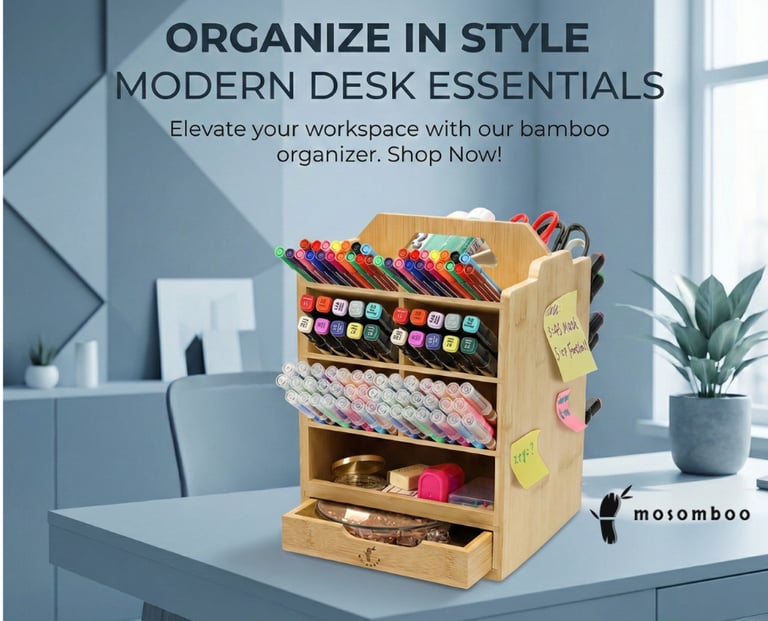
Modern bamboo pen holders also deliver practical functionality—including rotating storage, compartmentalized organization, and durable structural strength for daily use.
Understanding Plastic Pen Holders
Plastic pen holders remain common due to low manufacturing costs and widespread availability. They are typically made using petroleum-based polymers such as polypropylene or polystyrene.
Characteristics of Plastic Organizers
Lightweight construction
Low upfront cost
Mass production scalability
Available in many colors and shapes
However, environmental concerns around plastic usage have increased significantly due to:
Fossil fuel extraction
Manufacturing emissions
Microplastic pollution
Limited recycling success rates
Long decomposition timelines
Consumers increasingly search for alternatives as awareness grows around plastic waste reduction and sustainable office product choices.
Production Impact
Bamboo Manufacturing Footprint
Producing bamboo products typically requires fewer chemical processes and less energy compared to synthetic polymers. Responsible sourcing and processing help reduce ecological disruption while promoting renewable material cycles.
Plastic Manufacturing Footprint
Plastic production depends heavily on fossil fuels, generating emissions during extraction, refinement, and fabrication. The scale of global plastic manufacturing contributes to environmental strain beyond the product’s useful lifespan.
From a life cycle perspective, bamboo generally presents a lower environmental burden when sustainably harvested and manufactured.
Durability and Lifespan
A common misconception is that eco-friendly materials sacrifice performance. In reality, bamboo offers strong durability suitable for daily desk use.
Bamboo Durability Advantages
Resistant to cracking under normal use
Naturally sturdy structure
Maintains shape and stability
Long usable lifespan with proper care
Plastic Durability Factors
Can warp or degrade over time
Prone to surface scratching
Vulnerable to heat exposure
May become brittle with age
Choosing longer-lasting accessories reduces replacement frequency — contributing to lower overall environmental impact.
Waste Management and End-of-Life Impact
Bamboo Disposal Considerations
Bamboo products are biodegradable under appropriate conditions. While not all disposal environments support full decomposition, they avoid contributing to permanent synthetic waste.
Plastic Disposal Challenges
Plastic pen holders may remain intact for decades or longer after disposal. Recycling rates remain inconsistent globally, meaning many products enter landfills or marine ecosystems.
This difference significantly affects sustainable product lifecycle evaluations.
Health and Safety Considerations
Modern consumers prioritize safe materials in everyday environments — especially for workspaces and study areas.
Bamboo Safety Benefits
Naturally non-toxic material
Minimal chemical exposure
Suitable for shared environments
Preferred for child-safe desk organization
Plastic Safety Considerations
Depending on manufacturing quality, plastics may contain additives or coatings that raise concerns in some environments.
Material transparency and production standards play important roles in consumer decision-making.
Cost and Accessibility
Plastic organizers generally offer a lower initial purchase cost, making them widely accessible.
Bamboo organizers may involve a slightly higher upfront investment, but many buyers evaluate value through:
Longevity
Sustainability alignment
Aesthetic appeal
Environmental responsibility
As demand grows, eco-friendly office accessories continue becoming more competitive in price and availability.
Consumer Choice and Sustainable Living
Choosing between bamboo and plastic reflects broader lifestyle priorities. Consumers researching green office solutions, eco desk organization, and sustainable home office upgrades often prioritize:
Renewable materials
Lower environmental footprint
Long product lifespan
Reduced waste impact
Bamboo pen holders align with these goals while maintaining practical functionality for modern workspaces.
👉 Explore an eco-friendly option here: Buy Now
Conclusion
Small decisions — like selecting a desk organizer — collectively influence environmental outcomes. Bamboo pen holders offer renewable sourcing, biodegradability, and durability advantages, making them attractive alternatives for sustainability-minded users.
While plastic remains accessible and widely available, its lifecycle impact continues to drive consumers toward eco-conscious choices in 2026 and beyond.
For individuals building greener workspaces, switching materials is a simple yet meaningful step toward responsible consumption.
FAQ
Is bamboo really better for the environment than plastic?
Bamboo is renewable and biodegradable, while plastic relies on fossil fuels and decomposes slowly. This generally gives bamboo a sustainability advantage.
Are bamboo pen holders durable enough for daily use?
Yes. Properly manufactured bamboo organizers are sturdy and designed for long-term everyday use.
Can plastic pen holders be recycled?
Some can, but recycling success varies by region and material type.
Do eco-friendly desk accessories cost more?
They may have a higher upfront cost, but often offera longer lifespan and environmental benefits.
Why are bamboo office products trending in 2026?
Growing awareness of sustainability, minimalism, and natural workspace design is driving demand for renewable materials.
MOSOMBOO
© Copyright Mosomboo 2022 - 2026. Site Built and Managed by IntelliPath
Follow us on Social
CATEGORIES
MENU
INFO